

Caribbean Financial Dispatch | June 7, 2026
Executive intelligence on Caribbean markets, policy and risk
Executive Signal
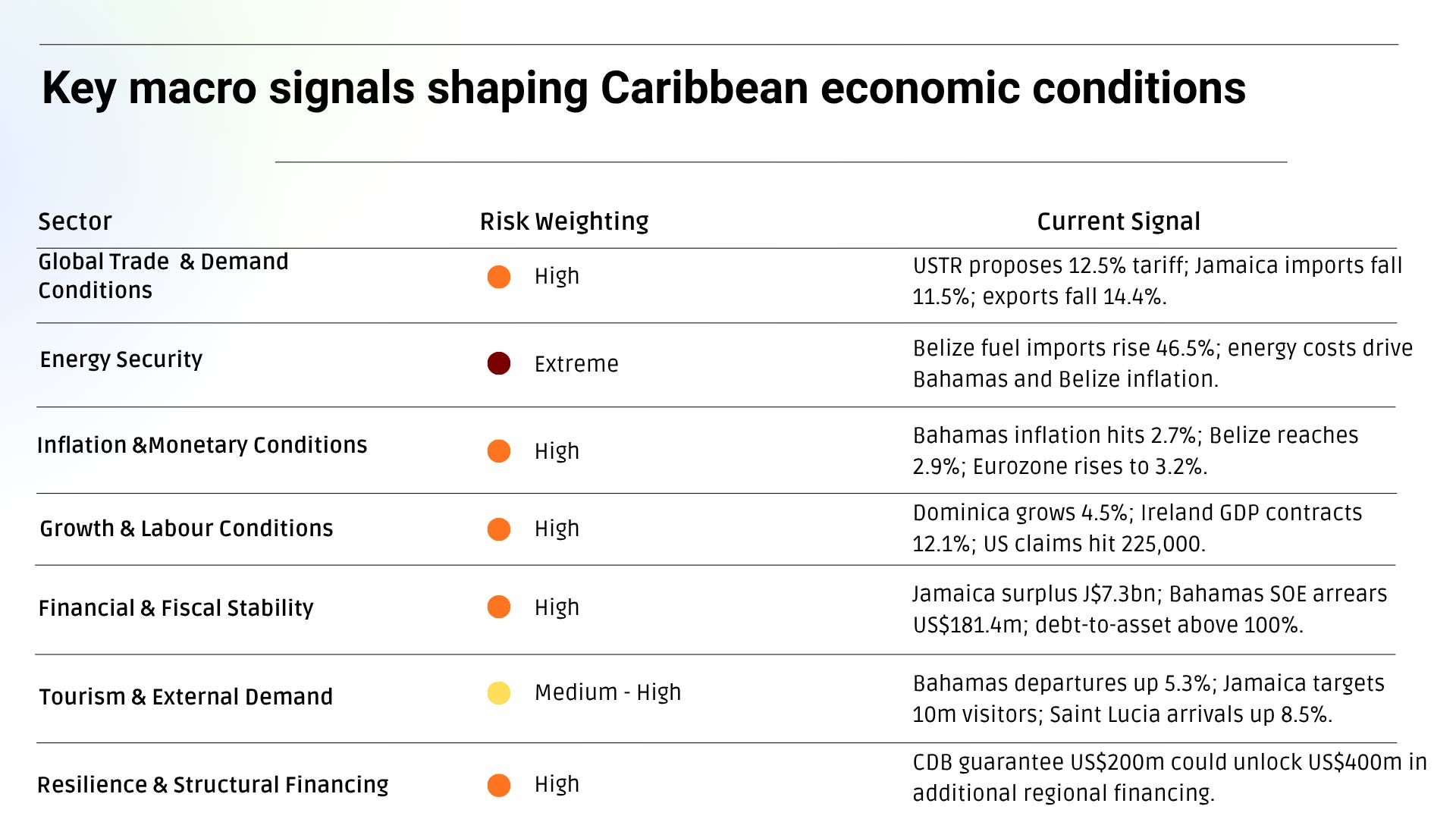
Caribbean economies continue showing resilience through tourism growth, fiscal gains, external reserves and stronger revenue performance. However, inflation pressures, SOE risks, trade compliance threats, import dependence and global policy uncertainty are raising the region’s exposure to external shocks.
Regional Signals
Tourism remains a key growth driver, with Bahamas, Jamaica and Saint Lucia reporting strong visitor momentum.
Inflation pressures are rising across selected economies, driven by fuel, utility, transport and housing costs.
Fiscal performance improved in Jamaica, but SOE risks and debt vulnerabilities remain important regional concerns.
Market Signals
CDB’s Canadian guarantee could unlock up to US$400 million in additional regional development financing.
Caribbean financial independence is gaining policy attention amid calls for stronger indigenous financial institutions.
Banking-sector restructuring continues as Antigua seeks local participation in the proposed CIBC Caribbean acquisition.
Global Macro Signals
Fuel costs are feeding airline fees, Eurozone inflation and wider pressure on household and transport costs.
Labour market conditions are weakening as UK redundancy warnings rise and US jobless claims increase.
Trade uncertainty is intensifying through US tariff proposals, USMCA content rules and Panama Canal climate risks.
Strategic Outlook
Caribbean exporters may face higher compliance costs as labour standards and supply-chain certification become more important.
Tourism growth remains positive, but rising fuel costs could pressure airlift, affordability and destination competitiveness.
SOE reform and fiscal governance will become increasingly important to protecting public finances and taxpayer exposure.
Regional financial resilience may depend more heavily on guarantees, development banks, blended finance and local capital mobilisation.
Editor’s Note
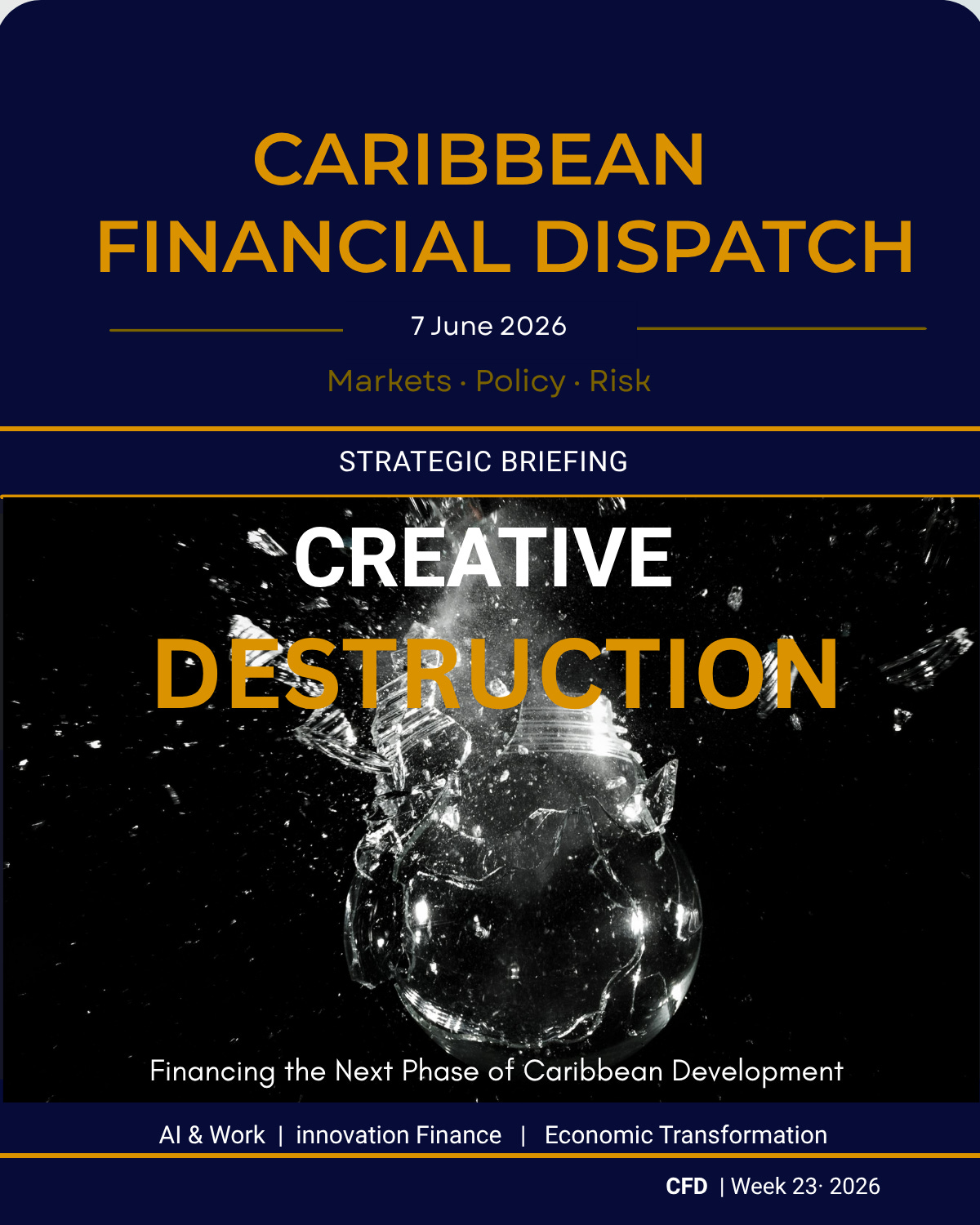
Financing Creative Destruction
The Caribbean Paradox
Across the Caribbean, conversations about artificial intelligence are becoming increasingly urgent. Policymakers, educators and business leaders are grappling with questions surrounding automation, productivity and the future of work. Concerns about the displacement of clerical, administrative and even professional occupations are no longer confined to advanced economies.
Recent research and policy discussions have reinforced these concerns. A study undertaken by the University of Technology, Jamaica estimated that approximately 22 per cent of the country’s workforce faces high to medium exposure to automation, including roughly 60,000 jobs considered to be at high risk. The research suggested that female-dominated occupations, particularly clerical and customer service roles, may be especially vulnerable. At the same time, the Planning Institute of Jamaica has noted that artificial intelligence is likely to enhance productivity and create new opportunities even as it disrupts existing ones. While the precise scale and timing of these changes remain uncertain, the broader implication extends well beyond Jamaica. Across the Caribbean, governments, businesses and educational institutions are increasingly confronting questions about the future of work and the industries that will underpin long-term growth.
Yet focusing exclusively on the number of jobs that may be displaced risks overlooking a more important question. If artificial intelligence alters the nature of work, where will the new opportunities emerge, and what will be required to create them?
Economists have long described this process as creative destruction—the replacement of older technologies, business models and industries by new ones. The challenge for the Caribbean is not simply one of job displacement. It is one of economic transition.
As artificial intelligence, digital technologies and changing patterns of value creation reshape global markets, the region will increasingly need to cultivate new engines of growth. Knowledge-based services, technology-enabled enterprises, renewable energy and the Orange Economy are likely to assume greater importance. In a world where artificial intelligence is automating routine tasks, creativity, cultural expression and intellectual property may become increasingly valuable economic assets.
These developments raise a broader question. For decades, much of the Caribbean’s development model has been built around tourism, agriculture, construction, financial services and public sector employment. These sectors remain important and will continue to play a central role in regional economies. The traditional development model remains necessary, but it may no longer be sufficient in an economy increasingly driven by knowledge, creativity, data and intellectual property.
Much of the policy discussion has focused on workforce transition. Equally important, however, may be the need for a capital transition. If future growth is expected to emerge increasingly from technology-enabled enterprises, knowledge-based services and creative industries, then the region must also consider whether its financial systems are equipped to support those activities.
Recognizing these realities, several Caribbean jurisdictions have sought to modernize lending frameworks through secured transactions reform. The objective is straightforward: to broaden the range of assets that businesses can use as collateral. Rather than relying exclusively on land and buildings, these frameworks permit security interests in movable assets such as equipment, inventory, receivables and, in some cases, intellectual property. Legislation is now in place in Jamaica, Belize, Guyana and across the Eastern Caribbean Currency Union, including Saint Lucia, while similar reforms remain under active consideration in Suriname.
Yet legal recognition alone does not automatically translate into financing. Modern lending systems depend upon a broader ecosystem of valuation standards, collateral registries, enforcement mechanisms, secondary markets and prudential regulations. Secured transactions legislation addresses an important component of that ecosystem, but legislation alone cannot eliminate the practical challenges associated with financing intangible assets.
For traditional forms of collateral such as land and buildings, valuation methodologies are relatively established and secondary markets generally exist. By contrast, determining the value of intellectual property and other intangible assets can be considerably more challenging. Equally important is the question of whether sufficient markets exist to realize that value should a borrower become distressed. In many cases, the issue is not whether these assets possess value, but whether that value can be reliably measured, protected and ultimately realized.
Regulatory considerations further complicate the picture. While secured transactions reforms have expanded the legal recognition of movable assets as collateral, prudential frameworks have not always evolved in parallel. In practice, facilities supported by many forms of non-traditional collateral continue to be treated as unsecured lending under existing banking legislation. This is not merely a matter of lender preference. It is often a statutory reality that subjects such exposures to quantitative restrictions and concentration limits that influence lending decisions and portfolio construction.
The financing landscape is, however, evolving. Across the region, microcredit institutions, finance companies and alternative lenders have expanded their presence, offering access to capital for businesses that may struggle to secure conventional bank financing. Yet while access may improve, the cost of capital often increases significantly. For sectors expected to drive future economic transformation, the availability of capital is only part of the equation. The affordability of capital matters as well.
The result is a growing paradox. Across the Caribbean, governments are encouraging innovation, entrepreneurship, digital transformation and the development of knowledge-based industries. Yet many of the institutions responsible for financing economic activity remain in various stages of their own transition. The Caribbean has made important progress in recognizing non-traditional assets in law. The more difficult challenge may be ensuring that those assets are recognized throughout the wider financial ecosystem.
This should not be interpreted as a criticism of banks, regulators or policymakers. Each is responding rationally to the incentives, risks and constraints that exist within the current system. The issue is broader. Technological adaptation and workforce adaptation have received considerable attention in recent years. Institutional adaptation has received far less scrutiny despite its potential importance to the region’s long-term competitiveness.
Artificial intelligence is not merely changing how work is performed. It is accelerating a broader process of creative destruction that is reshaping the structure of economic activity itself. The Caribbean’s challenge may not simply be preparing workers for the jobs of the future. It may be ensuring that the institutions responsible for financing economic activity are capable of supporting the businesses that emerge from that future.
If the next generation of Caribbean growth is expected to emerge increasingly from ideas, creativity, intellectual property, data and specialized knowledge, then the question is no longer whether the region’s economy is changing. The question is whether the institutions that support economic activity are evolving quickly enough to keep pace. In the years ahead, the Caribbean’s competitiveness may depend not only on its ability to generate innovation, but also on its ability to finance it.
Regional FX Snapshot
Caribbean Economic Dashboard
Key Regional Indicators
Regional Roundup
Key economic developments across Caribbean economies
Regional Pulse: Caribbean economies balanced tourism growth and fiscal gains against rising inflation, trade uncertainty, external vulnerabilities and debt risks.
Sovereign Watch
Monetary policy | Fiscal position | Financial stability
Bahamas Economy Maintains Growth Momentum
The Bahamian economy continued to expand in April 2026, supported by tourism growth, strong liquidity conditions and rising external reserves. International departures increased 5.3% year-on-year to 163,582 passengers, while short-term rental room nights sold rose 9.5% to 61,441. Banking sector excess reserves grew by $72.5 million to $2.05 billion and external reserves increased by $133.5 million to $3.22 billion. Meanwhile, total Bahamian dollar deposits expanded by $154.9 million, reflecting continued foreign exchange inflows and robust domestic financial conditions.
Bahamas Inflation Accelerates
Consumer prices in The Bahamas rose 2.7% year-on-year in February 2026, while monthly inflation accelerated to 0.95%, reversing the 0.1% decline recorded in January. The increase was driven primarily by higher housing, water, electricity, gas and fuel costs, which rose 2.7% during the month, alongside gains in transport (0.6%) and health (0.5%). On an annual basis, restaurants and hotels recorded the largest increase at 17.1%, followed by furnishings and household maintenance at 8.5%, highlighting continued cost-of-living pressures across the economy.
Belize Inflation Driven by Fuel and Utility Costs
Belize’s inflation rate rose to 2.9% in April 2026, with the Consumer Price Index increasing from 119.6 to 123.2 compared with a year earlier. Price pressures were driven primarily by transport costs, which surged 8.0% as fuel prices increased, alongside gains in food and non-alcoholic beverages (2.6%) and housing, utilities and fuels (2.0%). The Statistical Institute reported month-on-month inflation of 1.0% and year-to-date inflation of 1.4%.
Dominica Growth Strong but Debt Risks Persist
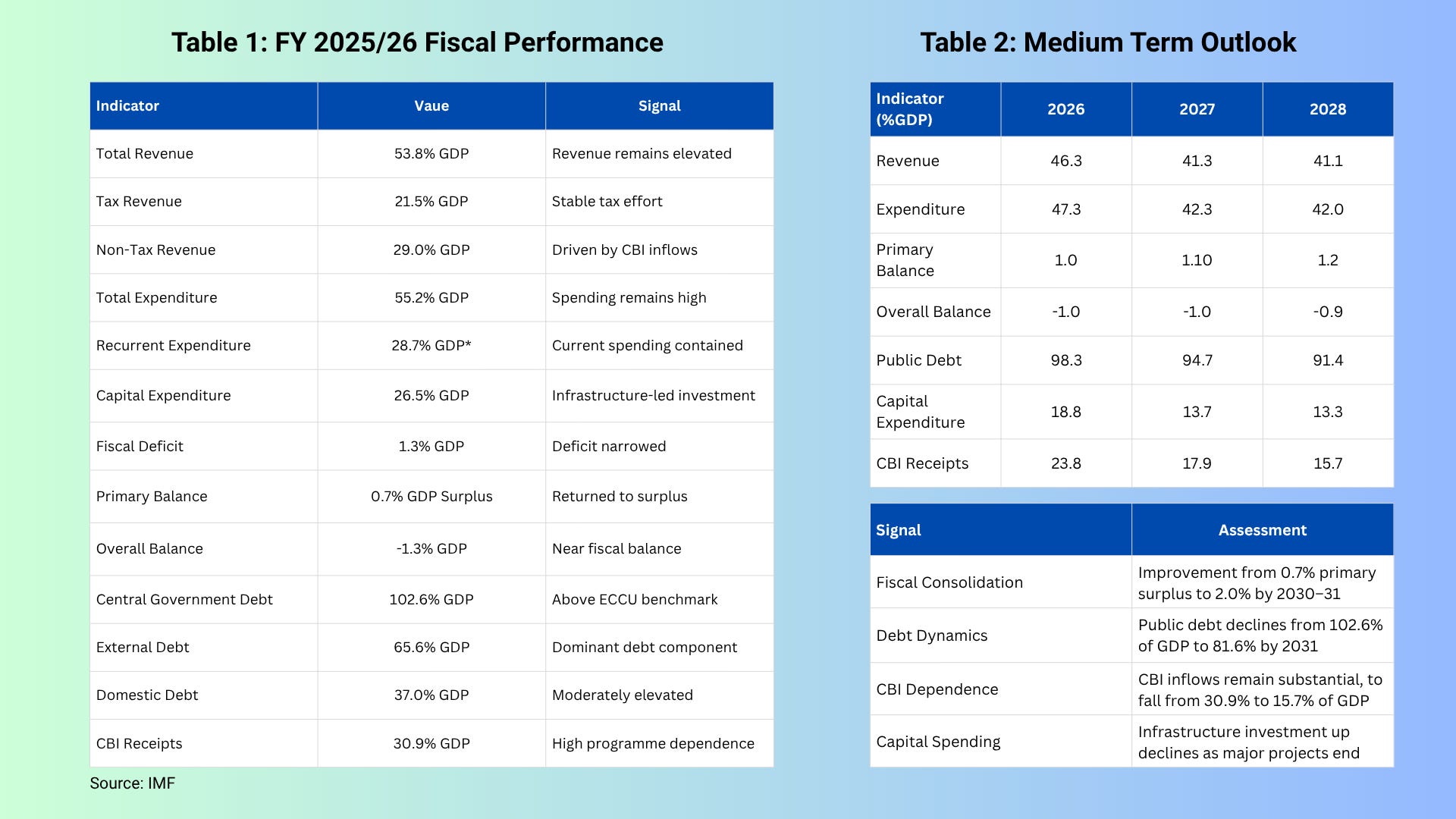
Dominica’s economy grew 4.5% in 2025, up from 3.5% in 2024, supported by tourism activity now 36% above pre-pandemic levels and ongoing infrastructure investment. Inflation eased to 2.3%, while public debt declined to 103% of GDP from its post-pandemic peak of 118%. However, the current account deficit remained high at 38% of GDP and the primary fiscal deficit widened to 4.5% of GDP. The IMF expects growth of about 3% in the near term but cautions that debt, external shocks and CBI dependence remain key risks.
Investment, Revenue & Economic Capacity
Capital flows | Revenue generation | Institutional performance
Jamaica Records Strong Fiscal Surplus
Jamaica’s central government recorded a fiscal surplus of J$7.3 billion in April 2026, supported by revenue and grants of J$99.8 billion, which exceeded expenditure of J$92.5 billion. Tax revenues reached J$97.6 billion, up 44.2% compared with April 2025, driven by stronger income taxes and domestic consumption taxes. The primary surplus stood at J$17.9 billion, while loan receipts totalled J$30.2 billion. As at end-March 2026 public debt reached 65.6% of GDP. Although revenues fell short of budget projections, the fiscal outturn remained significantly stronger than the deficit recorded one year earlier.
Bahamas SOE Risks Intensify
The Bahamas’ Fiscal Strategy Report 2026 found that nine major state-owned enterprises have collectively entered negative equity, with liabilities exceeding assets as their debt-to-asset ratio rose above 100% in 2023–2024 from 46–49% during 2020–2022. Government loans to 32 SOEs totalled nearly US$500 million at end-March 2026, while SOEs accounted for US$181.4 million, or 75%, of all public sector arrears. Bahamas Power & Light and Bahamasair were identified as the highest fiscal risks, highlighting growing pressure on public finances and taxpayer support.
Fiscal, Energy & External Pressures
Public finance | Energy transition | External balances
USTR Report Raises Trade Compliance Risks for Caribbean Exporters
The U.S. Trade Representative has proposed a 12.5% tariff on selected imports from 54 economies, including The Bahamas, Guyana, Trinidad and Tobago, and the Dominican Republic, following a Section 301 investigation into forced labour import enforcement. The review covered economies accounting for 99.4% of U.S. imports and found deficiencies in labour-related import controls that could distort competition and burden U.S. commerce. The proposal, subject to July public hearings, highlights the increasing importance of labour standards, supply-chain transparency, and export certification for Caribbean exporters accessing the U.S. market.
Belize Imports Surge Amid Strong Domestic Demand
Belize’s merchandise imports increased 21.0% year-on-year to $268.0 million in April 2026, driven by higher spending on fuel, machinery, transport equipment and manufactured goods. Imports of mineral fuels and lubricants rose 46.5% to $50.2 million, while machinery and transport equipment increased to $62.6 million. For the first four months of 2026, imports climbed 17.6% to $1.1 billion. In contrast, domestic exports declined 4.1% in April and were down 7.2% year-to-date, indicating a widening merchandise trade imbalance.
Guyana–Brazil Trade Reaches US$1 Billion
Trade between Guyana and Brazil expanded from approximately US$58 million in 2020 to US$1 billion in 2026, driven by rising demand in energy, mining, infrastructure and construction. Brazil became Guyana’s fifth-largest source of imports and seventh-largest export market by 2024. While trade remains heavily tilted in Brazil’s favour due to differences in productive capacity and competitiveness, both countries are advancing major integration projects, including the Linden–Lethem Road, a deep-water port and airport upgrades, to strengthen regional connectivity and economic cooperation.
Jamaica Trade Activity Declines
Jamaica’s merchandise imports fell 11.5% year-on-year to US$573.1 million in January 2026, reflecting lower spending on raw materials and intermediate goods (-12.3%), consumer goods (-10.9%) and fuels and lubricants (-30.7%). Export earnings also declined, falling 14.4% to US$114.8 million, largely due to a 34.9% drop in crude material exports excluding fuels. Imports from Jamaica’s main trading partners totalled US$379.0 million, while export earnings from its top five export markets declined 3.1% to US$94.2 million.
Tourism and Demand
Bahamas Tourism Growth Remains Strong
The Bahamas’ tourism sector maintained positive momentum through April 2026, supported by continued growth in cruise arrivals and the high-value stopover market. International departures from Lynden Pindling International Airport increased 5.3% year-on-year to 163,582 passengers, driven by a 42.6% surge in non-US traffic, while US departures declined 1.0%. For the first four months of 2026, total outbound traffic rose 4.8% to nearly 600,000 passengers. Meanwhile, vacation rental room nights sold increased 9.5% to 61,441, with occupancy rates improving to 54.4%, supporting broader economic growth and foreign exchange inflows.
Jamaica Targets 10 Million Visitors
Jamaica has launched a new tourism strategy targeting 10 million visitors and US$10 billion in annual tourism earnings over the next decade. The initiative follows progress toward the country’s earlier 5x5x5 target despite disruptions from the pandemic and Hurricane Melissa. Between January and May 2026, the island welcomed more than 1.5 million stopover and cruise visitors and generated approximately US$1.5 billion in tourism earnings. Growth continues to be supported by expanded airlift, increased accommodation capacity and the restoration of about 80% of hotel room inventory.
Saint Lucia Tourism Sets New April Record
Saint Lucia recorded a record 40,752 stay-over arrivals in April 2026, an 8.5% increase over the 37,546 visitors recorded a year earlier. Year-to-date stay-over arrivals reached 159,084, up 3.7%. The cruise sector also expanded, with April arrivals rising 34% to 53,461 and year-to-date arrivals increasing 9% to 418,174. Total visitor arrivals reached 99,162 in April, up 23%, while cumulative arrivals for the first four months of 2026 rose 7% to 596,662, supported by strong growth from Canada and regional Caribbean markets.
Regional Commodity Snapshot
Global Pulse
Major International developments shaping the global economic environment
Global Pulse: Energy shocks, trade realignment, labour market weakness and inflation pressures continue reshaping global growth, investment and policy conditions.
Energy, Inflation & Policy
Energy markets | Inflation | Monetary conditions
Airlines Turn to Fees as Fuel Costs Rise
American Airlines and other US carriers have increased baggage fees by roughly US$10 as jet fuel prices surged, with the airline citing more than US$4 billion in additional fuel-related expenses compared with 2025. Airlines often favour higher baggage fees over ticket price increases because ancillary charges are exempt from the 7.5% federal excise tax applied to domestic airfares. Separately, American Airlines revised its compensation policy for involuntary cabin downgrades, limiting refunds to 40% of the ticketed fare on affected flight segments.
US Pushes for Higher Domestic Auto Content
The United States is proposing new automotive rules that would require at least 50% US content in vehicles produced within the North American trade zone, as part of upcoming reviews of the US-Mexico-Canada Agreement (USMCA). The proposal comes amid ongoing US tariffs on automobiles, steel and aluminum, and could have significant implications for North American supply chains, manufacturing investment and regional trade competitiveness.
Eurozone Inflation Accelerates
Eurozone inflation rose to 3.2% in May, up from 3.0% in April and well above the European Central Bank’s 2.0% target. The increase was driven by a 10.9% rise in energy prices, reflecting elevated oil and gas costs following the U.S.–Iran conflict. Services inflation accelerated to 3.5%, while food, alcohol and tobacco inflation eased to 2.0%. Inflation varied across member states, ranging from 2.7% in Germany to above 5.0% in Greece and Lithuania, reinforcing expectations of a 25-basis-point ECB rate hike.
Growth & Labour Conditions
Output | Employment | Economic momentum
Ireland GDP Contracts as Export Surge Reverses
Ireland’s GDP contracted by 12.1% in the first quarter of 2026 compared with the previous quarter and was down 17.1% year-on-year, largely reflecting a 35% decline in activity within the pharmaceutical-dominated industrial sector as last year’s tariff-driven export surge unwound. Total exports fell 7.0% while imports rose 4.2%, resulting in a 39.8% decline in net exports. Despite the headline contraction, domestically focused sectors expanded by 0.4%, while modified domestic demand—a preferred measure of underlying economic activity—grew by 0.6%.
UK Redundancy Warnings Reach Five-Year High
The number of British workers facing potential job losses rose to more than 37,000 in the four weeks to May 24, the highest level for a comparable period since late 2020 and 62% above the level recorded a year earlier. The increase in redundancy notifications adds to evidence of a weakening UK labour market, following reports of a sharp decline in payroll employment. The trend comes as policymakers assess the economic impact of higher energy costs and inflationary pressures, with markets currently anticipating further interest rate increases from the Bank of England.
US Jobless Claims Reach Three-Month High
Initial applications for US unemployment benefits increased by 13,000 to 225,000 in the week ending May 30, the highest level since February and above market expectations of 215,000. The four-week moving average rose to 214,750, also the highest since February, while continuing claims declined to 1.78 million. Separately, technology firms announced 38,242 job cuts in May, the highest monthly total in nearly two years. Planned layoffs in the sector are running more than 65% above the level recorded during the same period in 2025.
Trade, Capital & Financial Systems
Investment | Regulation | Capital flows
US Proposes New Tariffs on Brazil
The Trump administration has proposed new 25% tariffs on imports from Brazil under Section 301 of the Trade Act, citing concerns over trade practices, anti-corruption enforcement and market access. The move comes despite the United States recording a US$14 billion goods trade surplus with Brazil in 2024, with US exports rising 11% to US$54.4 billion while Brazilian exports fell 5.7% to US$39.9 billion. Brazil has signalled possible retaliatory measures, while key products including aircraft and critical minerals may remain exempt.
Panama Canal Prepares for El Niño Risks
The Panama Canal Authority is reviewing potential vessel draft restrictions and other contingency measures ahead of a possible El Niño event that could begin later this year. Officials are seeking to avoid a repeat of the 2023–2024 drought, when reduced water levels constrained canal traffic and disrupted global shipping flows. While the canal currently permits vessel drafts of up to 50 feet, moderate restrictions are being considered. The move comes amid ongoing disruptions in the Strait of Hormuz, raising concerns about additional pressure on global trade, energy shipments and freight costs.
Structural Transformation
Technology | Productivity | Economic transition
China Expands Protections for Older Workers
China will introduce new regulations on July 1 granting legal protections to workers employed beyond the statutory retirement age. The reforms establish a distinct legal status for over-age workers and, for the first time, provide benefits such as work injury insurance. The measures support China’s delayed-retirement strategy amid rising labour force participation among older citizens. While expected to strengthen worker protections and reduce labour disputes, analysts caution that higher compliance costs could increase business expenses and temporarily slow hiring among older workers.
Cross-Market FX Snapshot
Market Watch
Corporate adjustments and financial pressures reflect tightening regional conditions
CDB Secures US$200 Million Credit Guarantee
The Caribbean Development Bank has secured Board approval to advance a US$200 million First-Loss Portfolio Credit Guarantee from the Government of Canada, a move expected to strengthen the Bank’s balance sheet and expand its lending capacity. The facility is projected to unlock up to US$400 million in additional financing for the Caribbean, supporting investments in climate resilience, sustainable infrastructure and economic development. The initiative forms part of broader multilateral development bank reforms aimed at increasing development financing while maintaining financial sustainability and capital strength.
Davis Calls for Caribbean Financial Independence
Bahamas Prime Minister Philip Davis urged Caribbean leaders to reduce reliance on the global financial system and accelerate the creation of regional financial institutions, including a Caribbean Export-Import Bank. Speaking at the Caribbean Development Bank’s 56th Annual Meeting, he highlighted the expansion of Afreximbank’s Caribbean commitment from US$3 billion to US$5 billion and called for greater use of regional guarantees, blended finance and development financing tools. Davis argued that stronger indigenous financial institutions are essential to improving resilience, supporting investment and advancing long-term economic development.
Antigua Seeks Stake in CIBC Caribbean Deal
Antigua and Barbuda’s government is seeking opportunities for local banks to participate in Butterfield Bank’s proposed US$1.8 billion acquisition of CIBC’s 91.7% stake in CIBC Caribbean. Prime Minister Gaston Browne said Antigua Commercial Bank has expressed interest in joining the ownership structure, while noting that CIBC is expected to retain a 22% stake after the transaction. Meanwhile, the Antigua and Barbuda Workers’ Union has called for full protection of employee rights, including severance, continuity of service and consultation obligations, as the deal advances through regulatory approvals.
Bermuda Reviews Banking Framework
Bermuda’s Monetary Authority is reviewing the island’s banking framework and considering new models to expand competition and financial services. Proposals include international agent banks, digital asset banks, development banks, mortgage corporations and investment banks. The reforms could allow foreign banks to offer selected services through local representatives rather than establishing full operations. Stakeholder feedback is being accepted until August 1, with the review aimed at supporting innovation, international business growth and financial sector resilience.
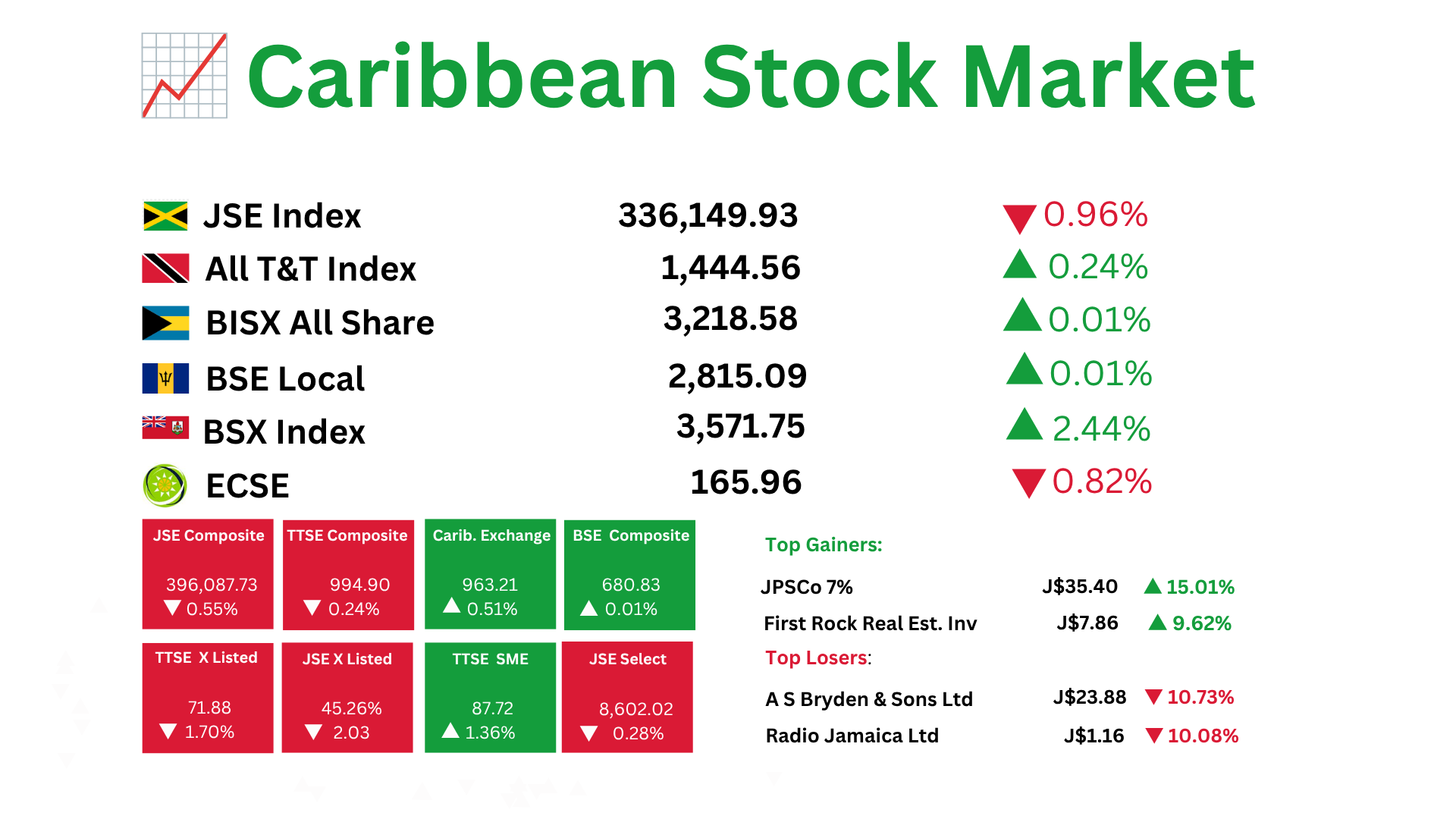
Caribbean Equity Snapshot - June 5, 2026
Statistical Corner
Global Equity Snapshot
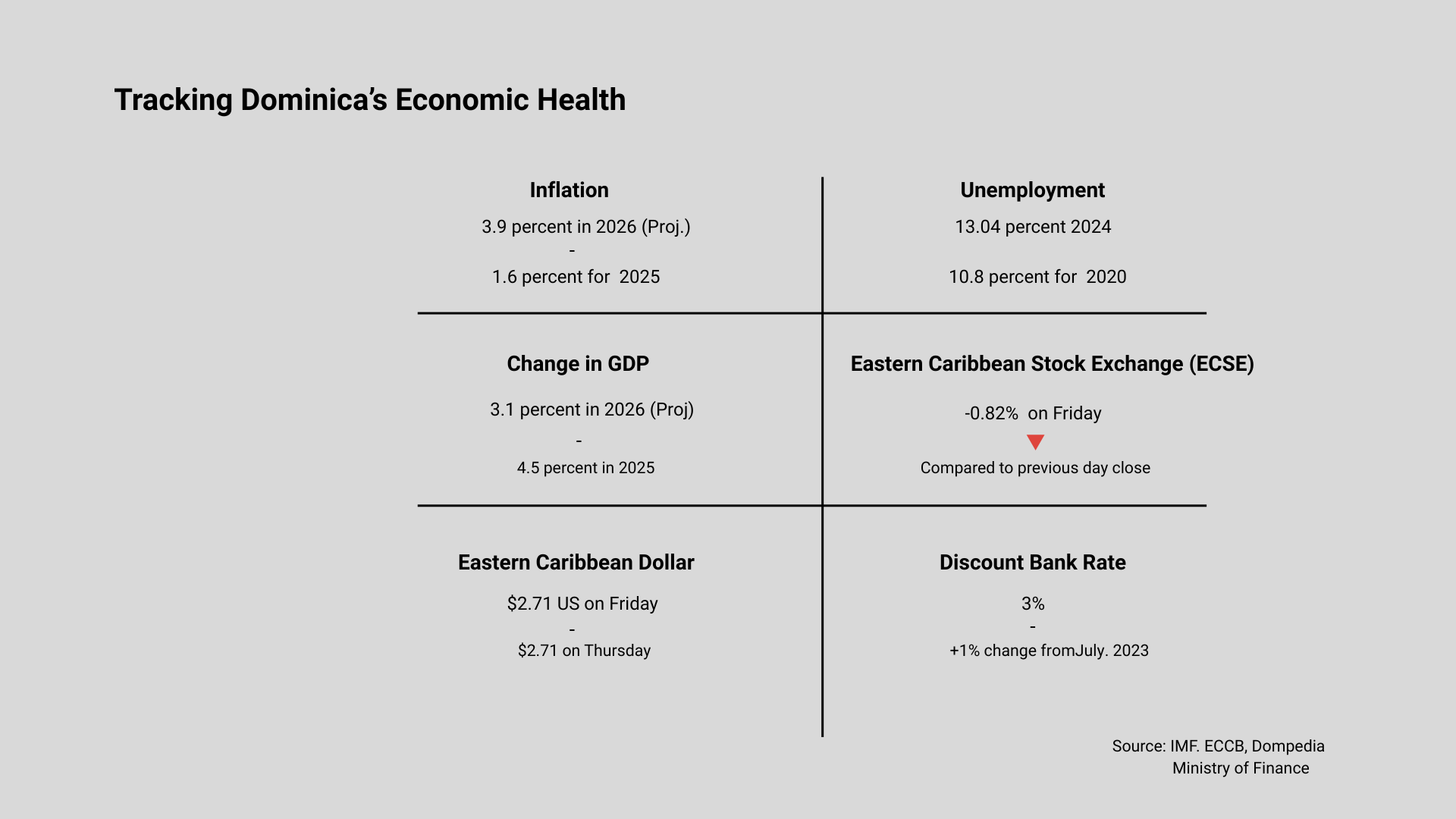
Country Focus - Dominica
Strategic Watch
Key Signals Shaping the Caribbean Economic Outlook
Tourism, reserves and fiscal balances remain supportive, but inflation and external vulnerabilities are beginning to re-emerge.
Trade policy fragmentation is accelerating as tariffs, domestic-content rules and compliance requirements reshape global commerce.
Rising fuel costs are increasingly transmitting through transportation, tourism, inflation and household expenditure channels.
Regional resilience will depend on stronger institutions, SOE reform, development finance innovation and deeper economic integration.
Advisory Note
For advisory engagements, strategic governance services and economic briefings, contact Joseph Cox & Associates Limited: enquiries@josephcox.org
Note: Selected CBR Intelligence Notes and extended analysis will be made available to subscribers as part of a premium tier in the near future.